Blueberries, Domes, And The Strange Economics Of Keeping A Farm Alive
Why keeping a farm alive now requires blueberries, glamping domes, hospitality, events, Substack subscriptions, and a growing willingness to invent new revenue wherever reality leaves an opening.
From the Opinion Desk, I will say something unfashionable. A farm is not a pastoral mood board. It is a business with weather exposure, biological exposure, labor exposure, capital exposure, and the sort of margin profile that can turn a grown adult into a philosopher against his will.
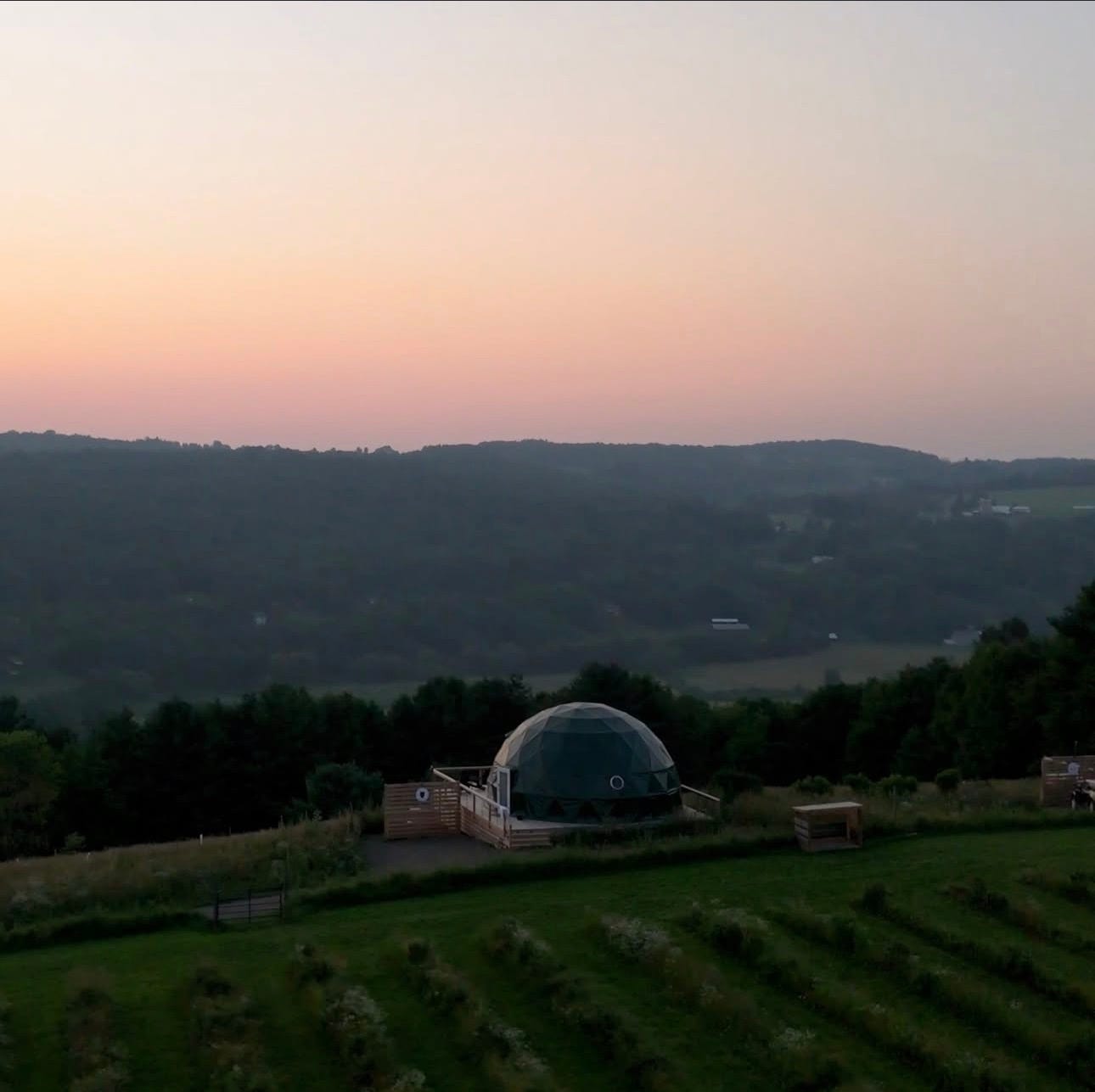
That is the strange economics of keeping a farm alive now. You may have beautiful land, healthy bushes, a decent harvest window, and a reasonably intact spirit. Then fuel climbs, travel demand gets weird, inflation bites, labor remains expensive, and the crop itself still does not care about your spreadsheet. Blueberries are still the point. But blueberries alone are rarely enough to keep the place standing.
The part that outsiders sometimes miss is that diversification is not a lifestyle flourish. It is often a survival mechanism. If one revenue stream gets squeezed, there has to be another one ready to catch some of the weight. That is where the domes come in. Not as a betrayal of farming, but as an argument with arithmetic. If the berries alone are not enough, then the land has to work in more than one language. It has to produce fruit, yes, but also overnight stays, events, experiences, and reasons for people to drive out of the city and hand their money to a place that is still trying to grow something real.
This is what small farms have increasingly been forced to become: part agriculture, part hospitality, part event venue, part nervous breakdown with a website. There is something absurd about this, and I mean that sincerely. We built an economy in which the people producing food increasingly need to become innkeepers, marketers, content creators, and experience designers just to keep the gates from sagging. The modern farm has to sell berries, yes, but also beauty, calm, memory, access, atmosphere, and the increasingly rare chance to sit somewhere without being psychologically mugged by a notification.
And yes, there is now another revenue stream: Substack subscriptions. Which is an equally strange and necessary sentence. Apparently, the path to keeping a farm alive now includes growing blueberries, running domes, hosting guests, writing satire, and hoping enough people decide that supporting sheep-based media analysis counts as a legitimate agricultural activity. Frankly, I think it does.
So yes, there are blueberries. There are also domes, trails, fire pits, hot tubs, events, and this publication. That may not be the old model of agriculture. But the old model increasingly appears to have been a luxury reserved for a country that no longer exists.
And so, the farm adapts. It grows fruit. It hosts people. It writes. It improvises. It tries to stay alive without becoming dishonest about what survival now requires.
Also, purely in the spirit of economic education and not at all as a subtle suggestion, paid subscriptions do help support the farm. Wink wink.
Justin
Opinion Desk
Acting Director of Keeping This Place Financially Sentient


From urban Oklahoma, yes there is such a place, I look forward to you and the sheep commenting on life. Thank you.
I love the line “the farm must speak many languages”